Twin Mom SVG: A Designer’s Review for Embroidery Use
As a designer who spends half my life digitizing and the other half stitching, I approach every new machine embroidery design with a mix of optimism and skepticism. We have all been there: downloading a file that looks crisp on the screen but turns into a tangled mess of thread breaks and puckering on the fabric. When I first pulled up the Twin Mom Svg, my immediate goal was to determine if this graphic asset could translate effectively into a high-quality stitched product for my clients.
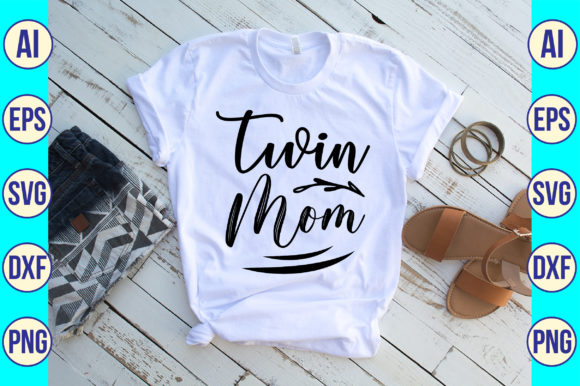
The file package is robust, offering an EPS vector, an editable AI source file, and a DXF AutoCAD file. For those of us working strictly in embroidery software, the transparency and vector nature of these files are crucial. They allow us to import the shape cleanly, trace it for stitching, or use it as a precise template for applique work. This isn’t just a static image; it is a flexible design asset ready for adaptation.
First Impressions and Visual Personality
The mood of the Twin Mom Svg is warm, celebratory, and distinctly modern. It avoids the cluttered, overly ornate styles that often plague niche parenting graphics. Instead, it relies on clean lines and balanced spacing. From a visual standpoint, this simplicity is a strength. In embroidery, less is often more. Complex gradients and tiny details do not stitch well; bold shapes and clear typography do.
This design feels like it belongs in the realm of boutique branding. It does not scream "cheap novelty." Instead, it suggests a thoughtful personalized gift. The layout is compact enough to fit on various items without overwhelming the garment, yet distinct enough to be recognized from a distance. For an Etsy seller or small shop owner, this visual clarity translates directly to better conversion rates because the customer immediately understands the sentiment.
Real-World Application: The Custom Sweatshirt Test
To truly evaluate any design, you must imagine it in a real-life scenario. I recently worked on a custom order for a client wanting matching outfits for her twin daughters’ first birthday. She wanted something subtle for their everyday wear but special enough for photos. I imported the Twin Mom Svg into my digitizing software to create a companion piece for the mother’s wardrobe.
Using the vector file, I traced the outline to create a satin stitch border with a light fill stitch interior. The result on a mid-weight cotton fleece sweatshirt was exceptional. The clean edges of the SVG translated into sharp stitch lines. Because the design is not overly dense, it did not stiffen the fabric excessively. This is a critical consideration for custom apparel; nobody wants a heavy, cardboard-like patch on their chest. The design sat flat, maintained its shape after washing, and looked professional.
Beyond sweatshirts, this graphic is versatile. It works beautifully as a tote bag design, where the larger surface area allows for a bigger scale without losing detail. It also serves well as a central motif for a nursery pillow cover or a decorative kitchen towel. For holiday embroidery projects, such as Christmas ornaments or festive aprons, the theme remains relevant year-round, adding value to the finished product.
Navigating Fabric and Hoop Constraints
While the design is strong, practical application requires caution. Not every fabric behaves the same way. When using this design on stretchy materials like jersey knits for t-shirts, a cut-away stabilizer is non-negotiable. Without proper support, the weight of the thread can distort the fabric around the letters or shapes. I always recommend testing on scrap fabric first, especially if you are new to working with the specific material your customer has chosen.
Hoop size is another factor. While the SVG is scalable, you must respect the limits of your machine and the readability of the design. If you shrink it too much for a small cap or a baby onesie, the finer details may merge. Conversely, blowing it up too large for a standard 5x7 hoop might require splitting the design, which can compromise alignment. For embroidered patch creation, however, the scalability is a major advantage. You can size it perfectly for a 4x4 hoop, creating a dense, durable badge that can be ironed or sewn onto jackets and bags.
Dark fabrics present their own challenge. If you are stitching on navy or black, ensure your thread colors have high contrast. A light gray thread on a black shirt might look sophisticated in a mockup but disappear in person. Always check your design in black and white before finalizing thread choices. This simple step saves hours of unpicking.
Commercial Viability and Brand Consistency
For craft business owners, the licensing and usability of digital files are paramount. The Twin Mom Svg comes with editable source files, which is a significant benefit. It means you are not stuck with a pre-digitized pattern that might not suit your machine’s tension or needle type. You can adjust the stitch density, change the underlay, or convert parts of the design to running stitch for a more delicate look.
This flexibility enhances brand consistency. If your shop specializes in minimalist aesthetics, you can strip the design down to its bare essentials. If your brand is more playful, you can add decorative elements around the core SVG. This level of control helps build trust with customers who expect high-quality, consistent handmade products. It also allows for the creation of printable mockups that accurately represent the final stitched item, reducing customer confusion and returns.
Practical Notes for the Embroiderer
Before you commit to a full production run, keep these technical tips in mind:
- Stabilizer Selection: Use tear-away for stable woven fabrics like towels or aprons, and cut-away for stretchy knits like t-shirts and sweatshirts.
- Thread Quality: High-sheen polyester or rayon threads highlight the smooth curves of the design. Matte cotton can give a rustic, vintage feel but may fray more easily.
- Needle Choice: A sharp embroidery needle is essential for piercing the fabric cleanly without causing pulls, especially if the design has tight corners.
- Test Stitching: Always run a test on the actual fabric you plan to use. Check for puckering, thread breaks, and registration accuracy.
- Licensing Check: While the file is ready to use, always confirm the specific license terms for selling finished physical items versus redistributing the digital file itself.
In the world of Crafts and Graphics, finding a file that bridges the gap between digital precision and tactile reality is rare. The Twin Mom Svg succeeds because it respects the limitations of the embroidery process while maximizing visual impact. It is not just a file; it is a tool for creating meaningful connections through handmade goods. Whether you are making a baby embroidery piece for a shower gift or a branded item for your online store, this design holds up under scrutiny. It is practical, adaptable, and undeniably charming.
Ultimately, the best designs are those that make the maker’s job easier and the recipient’s day brighter. This SVG achieves both. By understanding how to manipulate its vector properties and respecting the physics of thread and fabric, you can turn a simple digital file into a cherished heirloom. That is the true mark of a successful embroidery project.